
Practice quiz
15 practice questions in Dutch, with English
Answer like in the exam: read the Dutch and decide. The English translation is right below. After each answer you see why it is right or wrong.
Question 1 of 15
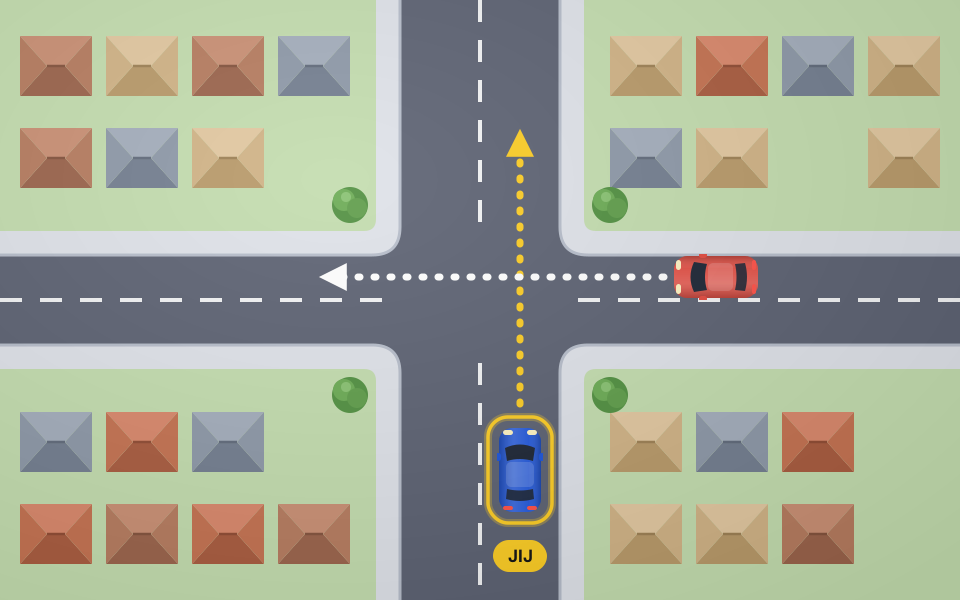
Je rijdt binnen de bebouwde kom rechtdoor. Rechts nadert een auto uit een smallere straat. Er zijn geen voorrangsborden, voorrangsmarkeringen of verkeerslichten. Wie heeft voorrang?
You go straight on in a built-up area. A car approaches from a narrower street on the right. There are no priority signs, priority markings or traffic lights. Who has priority?
Show the answer
Right answer: B. De auto die van rechts komt.The car coming from the right.
Op een kruispunt zonder verkeersborden, verkeerslichten of markeringen geldt voorrang van rechts. De breedte van de straat speelt geen rol, en wie het eerst aankomt evenmin. Je laat de auto van rechts voorgaan.
At a junction without traffic signs, traffic lights or road markings, priority from the right applies. The width of the street does not matter, nor does who arrives first. You let the car from the right go first.
Highway Code: Art. 12.3.1 Wegcode
Question 2 of 15
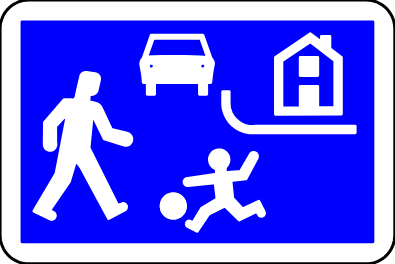
Je rijdt dit woonerf in. Hoe snel mag je maximaal rijden?
You enter this residential zone. What is the maximum permitted speed?
Show the answer
Right answer: B. 20 km/u20 km/h
Serious fault in the exam: −5 points
Dit bord duidt het begin van een woonerf aan. Daar is de snelheid beperkt tot 20 km/u, ook als je uit een zone 30 komt.
This sign indicates the beginning of a home zone. There, the speed is limited to 20 km/h, even if you come from a 30 km/h zone.
Highway Code: Art. 22bis, 3° Wegcode; art. 71.2 (F12a)
Question 3 of 15
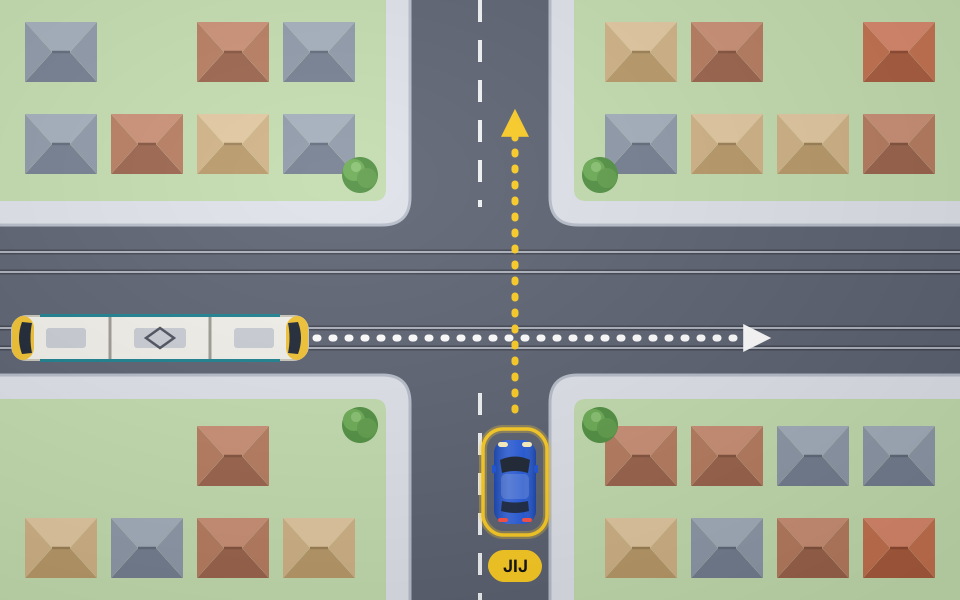
Je rijdt rechtdoor op een kruispunt zonder verkeersborden en zonder verkeerslichten. Van links nadert een tram. Wie heeft voorrang?
You are driving straight ahead at a junction without traffic signs and without traffic lights. A tram is approaching from the left. Who has priority?
Show the answer
Right answer: A. De tramThe tram
Elke weggebruiker moet voorrang verlenen aan spoorvoertuigen, zoals een tram. Ook als je van rechts komt, moet je de tram voorlaten.
Every road user must give way to rail vehicles, such as a tram. Even if you are coming from the right, you must let the tram go first.
Highway Code: Art. 12.1 Wegcode
Question 4 of 15
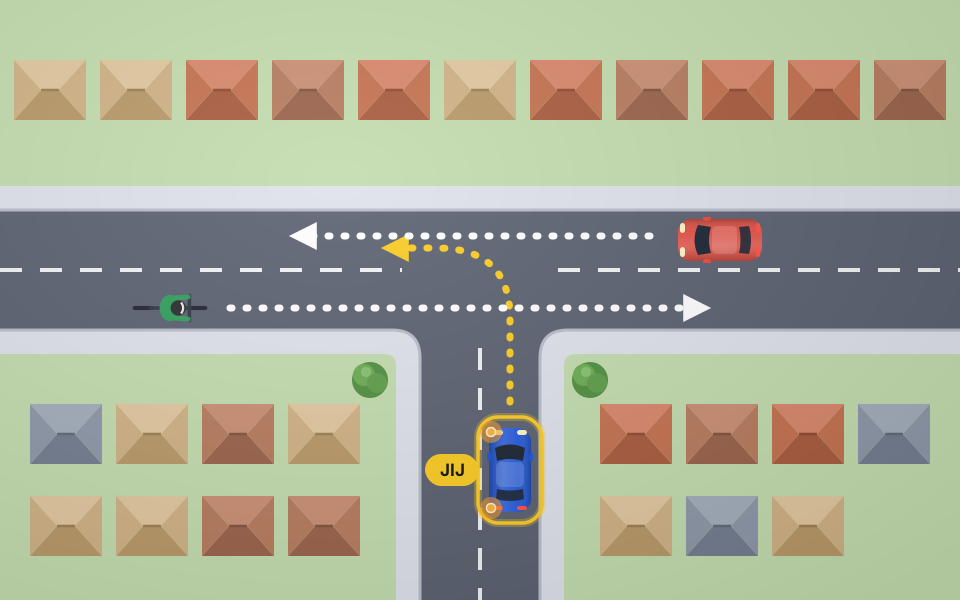
T-kruispunt zonder borden. Je komt uit de zijstraat en slaat links af. Van rechts komt een auto, van links een fietser; beiden rijden rechtdoor. In welke volgorde rijden jullie?
T-junction without signs. You come from the side street and turn left. A car comes from the right, a cyclist from the left; both drive straight ahead. In which order do you drive?
Show the answer
Right answer: A. De auto, dan ik, dan de fietser.The car, then me, then the cyclist.
Ook op een T-kruispunt geldt voorrang van rechts. Jij laat de auto van rechts voorgaan. De fietser komt van jouw linkerkant en moet jou voorrang geven.
Priority from the right also applies at a T-junction. You let the car from the right go first. The cyclist comes from your left side and must give way to you.
Highway Code: Art. 12.3.1 Wegcode
Question 5 of 15
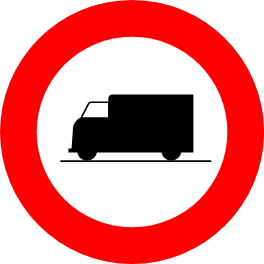
Je rijdt met je personenauto vol verhuisdozen. Je ziet dit verkeersbord zonder onderbord. Mag je doorrijden?
You are driving your passenger car full of moving boxes. You see this traffic sign without an additional panel. May you drive on?
Show the answer
Right answer: A. JaYes
Het bord
geldt voor voertuigen en slepen gebouwd voor goederenvervoer. Verhuisdozen maken je personenauto geen goederenvoertuig. Je mag doorrijden.The sign applies to vehicles and vehicle-trailer combinations built to carry goods. Moving boxes do not turn your passenger car into a goods vehicle. You may drive on.
Highway Code: Art. 68.3 (C23) Wegcode
Question 6 of 15
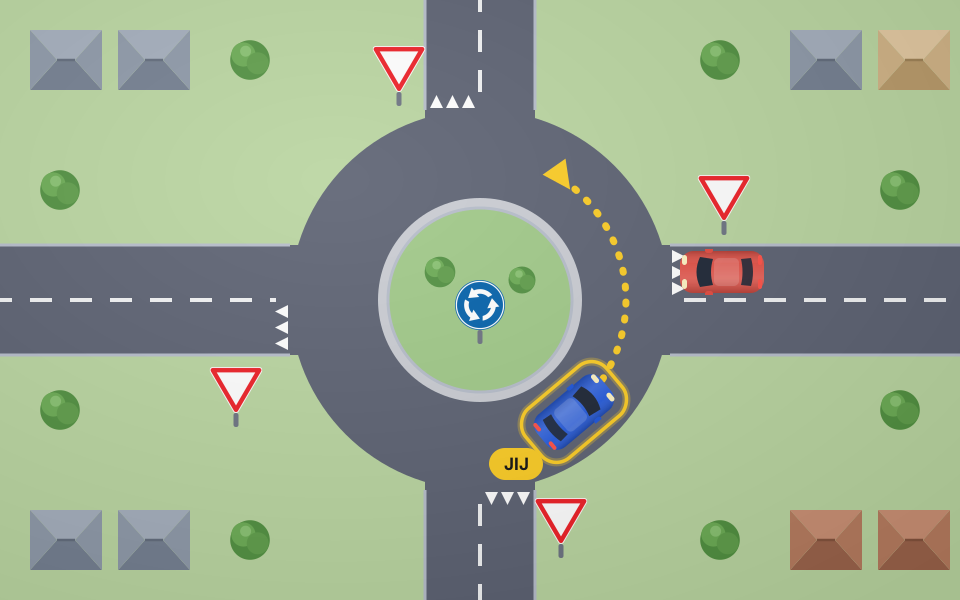
Je rijdt op een rotonde met verplichte rijrichting en 'voorrang verlenen' aan alle toegangen. Rechts wil een auto oprijden. Wie heeft voorrang?
You are on a roundabout with a compulsory direction and give-way signs at every entrance. A car wants to enter from the right. Who has priority?
Show the answer
Right answer: C. Ik, want ik rijd al op de rotonde.I do, because I am already driving on the roundabout.
Op een rotonde geldt geen voorrang van rechts. Het bord
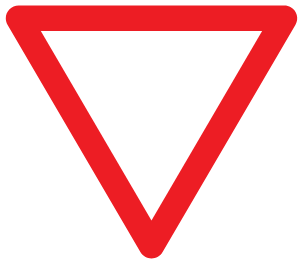 verplicht wie oprijdt voorrang te verlenen. Jij rijdt al op de rotonde en hebt voorrang.
Priority from the right does not apply on a roundabout. The sign requires entering drivers to give way. You are already on the roundabout and have priority.
Highway Code: Art. 12.3.1 en art. 2.39 Wegcode (Vlaams Gewest)
Question 7 of 15
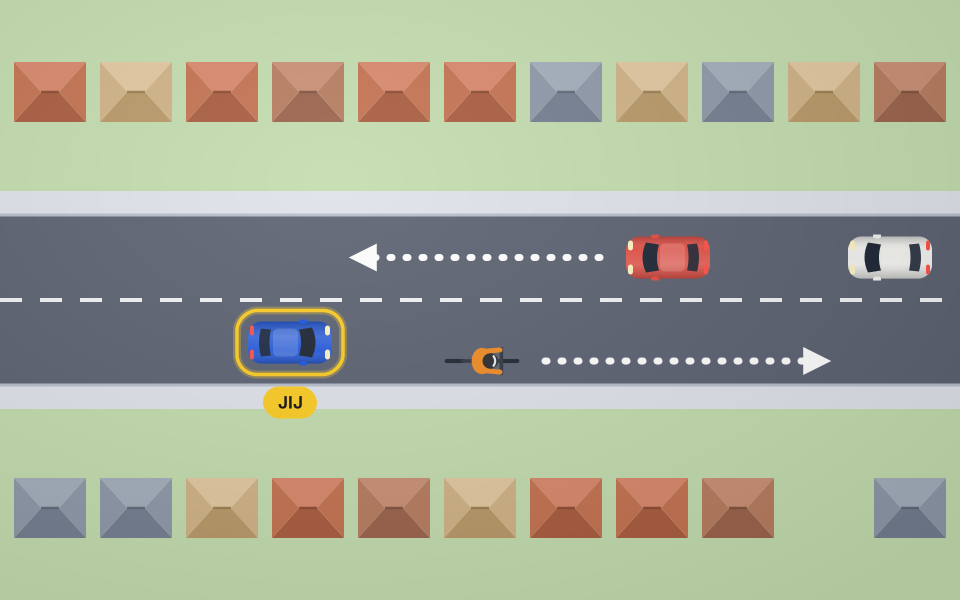
Binnen de bebouwde kom rijd je achter een fietser. Door tegenliggers zou je bij het inhalen maar een halve meter ruimte laten. Wat doe je?
Within a built-up area, you are driving behind a cyclist. Due to oncoming vehicles, you would only leave half a metre of space when overtaking. What do you do?
Show the answer
Right answer: B. Ik wacht tot 1 m ruimte mogelijk is.I wait until 1 m of space is possible.
Serious fault in the exam: −5 points
Binnen de bebouwde kom moet je bij het inhalen van een fietser minstens 1 m zijdelingse afstand laten. Kan dat niet, dan blijf je achter de fietser tot het wel kan.
Within a built-up area, you must leave at least 1 m lateral distance when overtaking a cyclist. If that is not possible, you stay behind the cyclist until it is.
Highway Code: Art. 40ter Wegcode
Question 8 of 15
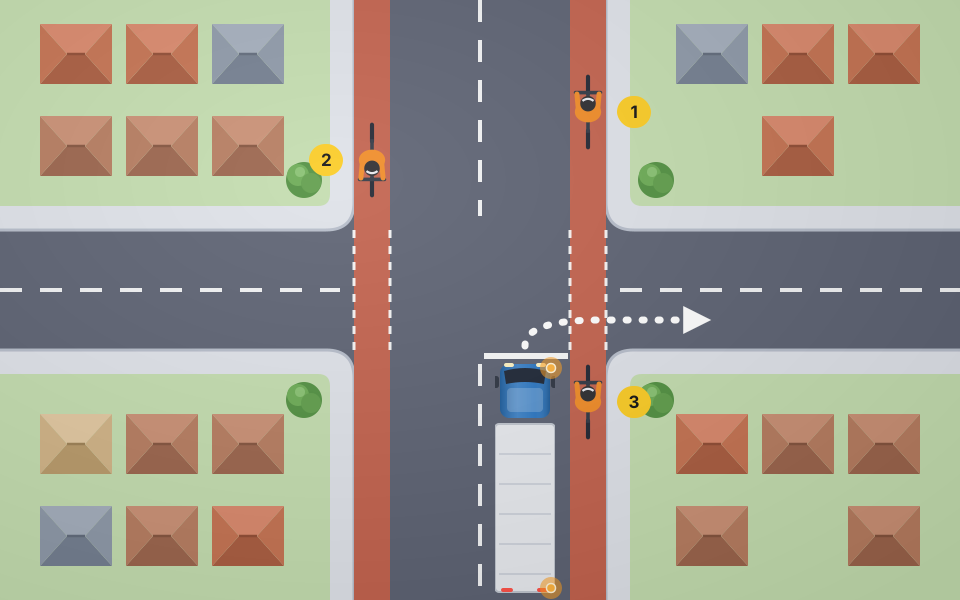
Deze vrachtwagen staat aan het kruispunt en gaat rechts afslaan. Welke fietser kan de chauffeur het slechtst zien?
This lorry is standing at the junction and is about to turn right. Which cyclist is the hardest for the driver to see?
Show the answer
Right answer: C. Fietser 3Cyclist 3
Rechts naast de cabine is de dode hoek van een vrachtwagen het grootst. De chauffeur ziet een fietser daar vaak niet, zelfs niet met al zijn spiegels. Fietsers 1 en 2 zijn verder vooruit en beter zichtbaar. Houd er als weggebruiker rekening mee dat een chauffeur jou niet altijd ziet.
The blind spot of a lorry is largest to the right of the cabin. The driver often does not see a cyclist there, not even with all his mirrors. Cyclists 1 and 2 are further ahead and more visible. As a road user, take into account that a driver does not always see you.
Highway Code: Geen wetsartikel; bron: Vias institute en veiligverkeer.be (dode hoek)
Question 9 of 15
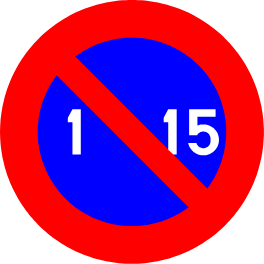
Het is de 10e van de maand. Je ziet dit verkeersbord. Mag je aan deze kant van de straat parkeren?
It is the 10th of the month. You see this traffic sign. Are you allowed to park on this side of the street?
Show the answer
Right answer: B. NeeNo
Het bord
verbiedt parkeren van de 1e tot de 15e van de maand. Op de 10e mag je hier niet parkeren.The sign prohibits parking from the 1st to the 15th of the month. You may not park here on the 10th.
Highway Code: Art. 70.2.1, 2° Wegcode
Question 10 of 15
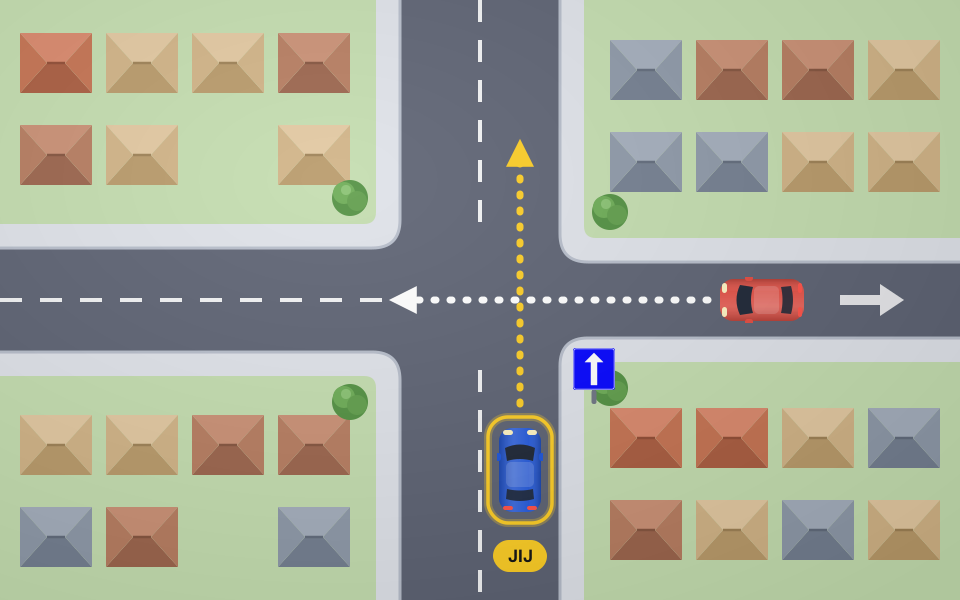
Op een kruispunt zonder voorrangsborden nadert rechts een auto uit een eenrichtingsstraat tegen de rijrichting. Jij rijdt rechtdoor. Moet je voorrang verlenen?
At a junction without priority signs, a car approaches from the right against a one-way street's direction. You go straight on. Must you give way?
Show the answer
Right answer: B. NeeNo
Nee. Wie uit een verboden rijrichting komt, heeft geen voorrang van rechts. Blijf wel dubbel voorzichtig en rem als dat nodig is om een ongeval te vermijden.
No. Anyone coming from a prohibited driving direction does not have priority from the right. Do remain doubly careful and brake if necessary to avoid an accident.
Highway Code: Art. 12.3.1 en art. 12.2 Wegcode
Question 11 of 15
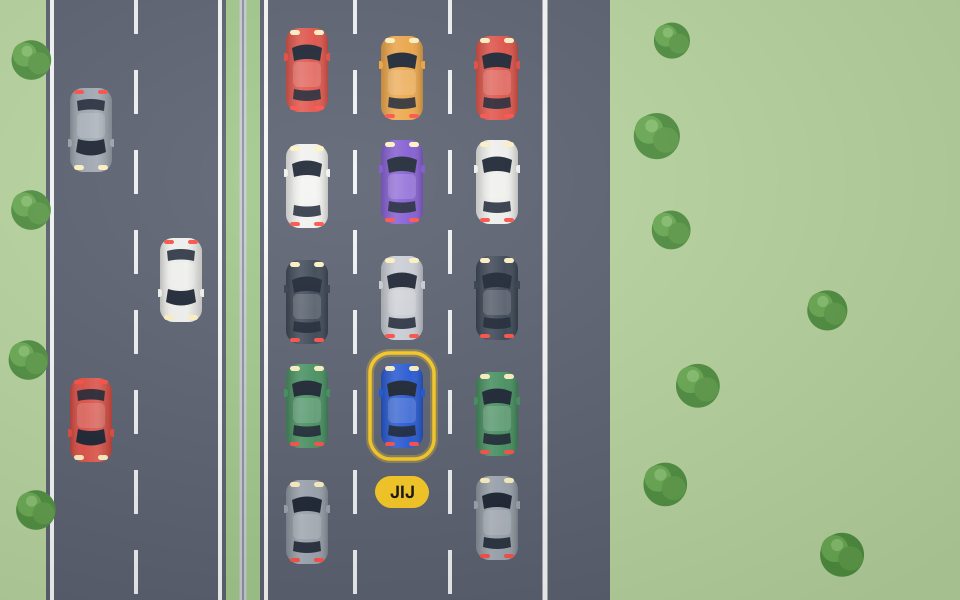
Op de autosnelweg ontstaat file. In jouw richting zijn er drie rijstroken. Waar moet de reddingsstrook komen?
A traffic jam is forming on the motorway. In your direction there are three traffic lanes. Where must the emergency corridor be?
Show the answer
Right answer: B. Tussen de linkerrijstrook en de middelste rijstrook.Between the left traffic lane and the middle traffic lane.
Bij file op een rijbaan met meer dan twee rijstroken gaan de bestuurders op de linkerrijstrook uiterst links. Alle anderen gaan naar rechts. Zo ontstaat de reddingsstrook naast de linkerrijstrook.
In a traffic jam on a carriageway with more than two traffic lanes, the drivers in the left traffic lane go to the extreme left. All others go to the right. This creates the emergency corridor next to the left traffic lane.
Highway Code: Art. 9.8, 2° Wegcode; art. 2.70 Wegcode
Question 12 of 15
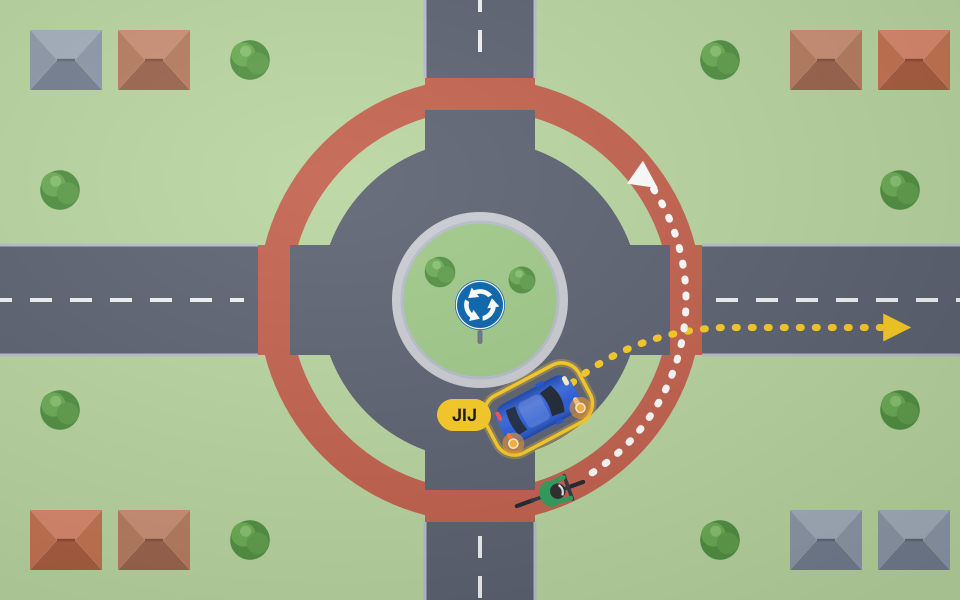
Bij het verlaten van een rotonde kruis je een fietspad zonder borden voor fietsers. Moet je de rechtdoorgaande fietser voorrang verlenen?
Leaving a roundabout, you cross a cycle path without signs for cyclists. Must you give way to the cyclist continuing straight on?
Show the answer
Right answer: A. JaYes
Serious fault in the exam: −5 points
Het verlaten van een rotonde is een richtingsverandering. Je moet voorrang verlenen aan wie de andere delen van dezelfde openbare weg volgt, zoals het fietspad.
Leaving a roundabout is a change of direction. You must give way to anyone following other parts of the same public road, such as the cycle path.
Highway Code: Art. 19.2, 1°, 19.4 en 12.4bis Wegcode
Question 13 of 15
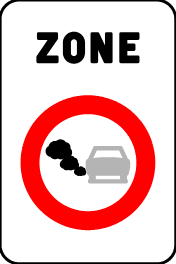
Je ziet dit verkeersbord. Wat betekent het?
You see this traffic sign. What does it mean?
Show the answer
Right answer: C. Begin van een lage-emissiezoneBeginning of a low emission zone
Het bord
duidt het begin van een lage-emissiezone (LEZ) aan, het bord 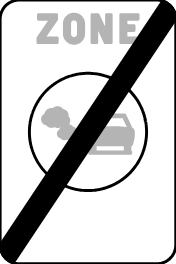 het einde.
This sign marks the start of a low emission zone (LEZ); the other marks its end.
Highway Code: Art. 2.63 Wegcode
Question 14 of 15
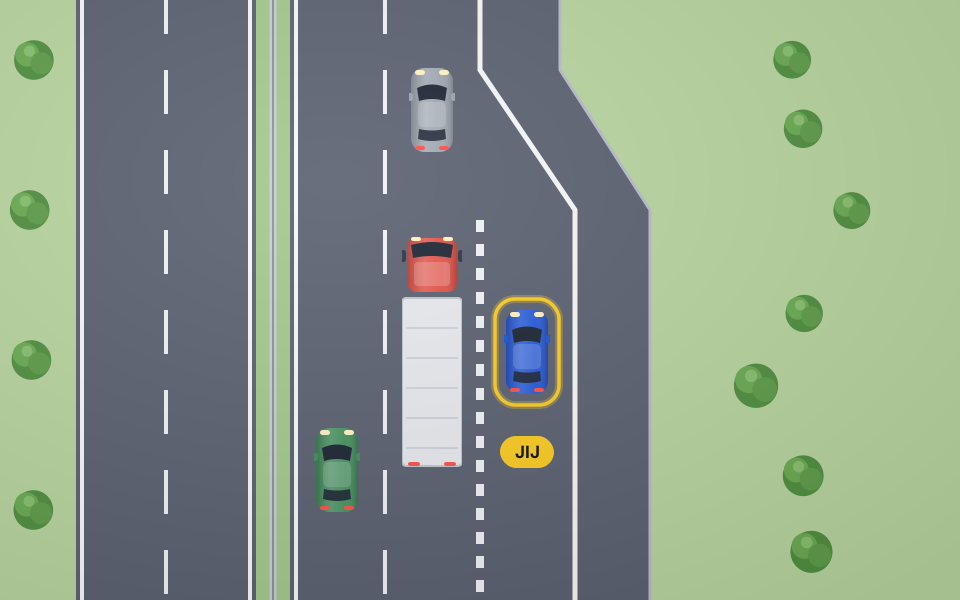
Je rijdt op de invoegstrook naast een vrachtwagen op de rechterrijstrook. Hij rijdt even snel als jij. De invoegstrook houdt bijna op. Wat doe je?
You are driving in the acceleration lane next to a lorry in the right-hand traffic lane. He is driving at the same speed as you. The acceleration lane is almost ending. What do you do?
Show the answer
Right answer: C. Ik vertraag en voeg achter de vrachtwagen in.I slow down and merge behind the lorry.
Serious fault in the exam: −5 points
Invoegen is van rijstrook veranderen, dus een manoeuvre: je moet voorrang verlenen aan wie al op de autosnelweg rijdt. Op de pechstrook rijden is verboden. Je vertraagt dus en voegt in achter de vrachtwagen.
Merging is changing lanes, so a manoeuvre: you must give way to those already driving on the motorway. Driving on the hard shoulder is prohibited. You therefore slow down and merge behind the lorry.
Highway Code: Art. 12.4 en 9.7 Wegcode
Question 15 of 15
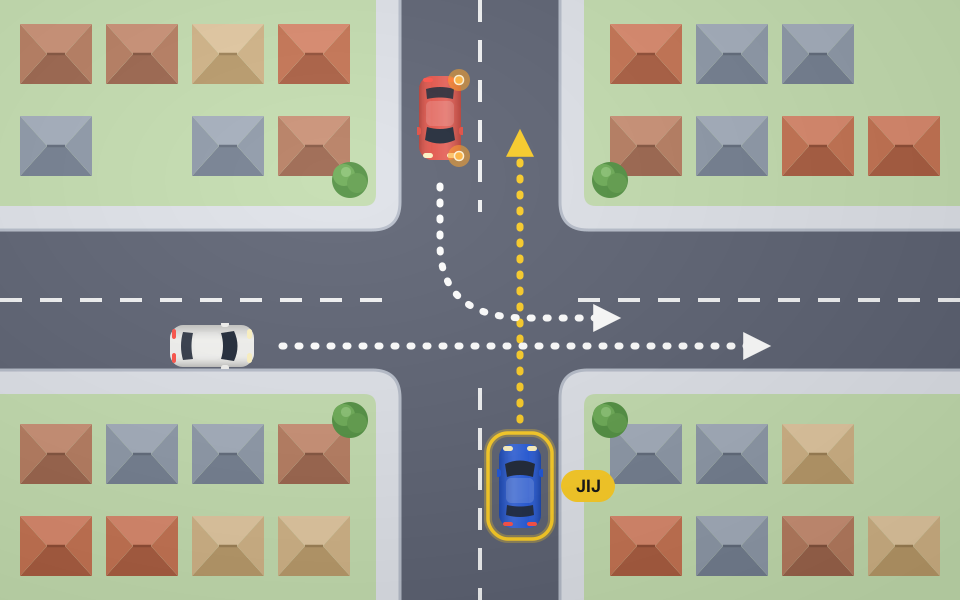
Kruispunt zonder borden. Je rijdt rechtdoor. Een tegenligger wil links afslaan. Van links komt een auto die rechtdoor rijdt. In welke volgorde rijden jullie?
Junction without signs. You drive straight ahead. An oncoming vehicle wants to turn left. A car comes from the left driving straight ahead. In which order do you drive?
Show the answer
Right answer: B. Ik, auto van links, tegenligger.Me, car from the left, oncoming vehicle.
De auto van links moet jou voorrang geven, want jij komt van zijn rechterkant. De tegenligger slaat links af: hij laat eerst jou voorgaan en daarna de auto die van zijn rechterkant komt.
The car from the left must give way to you, because you come from its right side. The oncoming vehicle turns left: it first lets you go first and then the car that comes from its right side.
Highway Code: Art. 12.3.1 en art. 19.3, 3° Wegcode
Your result
These are original practice questions from the app Rijbewijs B Theorie Vlaanderen, not questions from the real exam.
More than 1,100 questions like these
Practise every topic in Dutch with English explanations in Rijbewijs B Theorie Vlaanderen.

For iPhone and iPad